LaShonda Herndon: How Intentional Home Design Can Support Better Everyday Habits
The spaces people inhabit can quietly influence how they move through their days. LaShonda Herndon offers a useful lens for exploring the relationship between intentional home design and everyday habits, from creating functional spaces to reducing unnecessary friction in daily routines.
Home design is often discussed in terms of aesthetics, but its practical role can be just as important. The placement of frequently used objects, the organization of rooms, the availability of natural light, and the way different areas are used can all influence how easily people carry out ordinary activities.
Rather than pursuing a perfectly styled home, intentional design focuses on creating an environment that supports the way people actually live.
LaShonda Herndon and the Connection Between Space and Routine
Daily habits are often shaped by convenience. When something is easy to access, people are more likely to use it. When a task requires several unnecessary steps, it can become easier to postpone.
This makes the physical environment an overlooked part of habit formation.
A kitchen with frequently used ingredients stored logically can make meal preparation more manageable. A designated area for exercise equipment can reduce the effort required to begin a workout. A well-organized entryway can make leaving the house less chaotic.
These are relatively small changes, but they demonstrate a larger principle: good design can remove friction from desirable behaviors.
For LaShonda Herndon, this provides a practical way to consider home improvement without reducing it to decoration. The most useful design decisions are often those that make everyday activities feel more intuitive.
Designing Around How People Actually Live
One of the most common mistakes in home organization is designing for an imagined lifestyle rather than an actual one.
A beautifully arranged space may not remain functional if its organization conflicts with the habits of the people using it. Similarly, purchasing storage solutions without considering what needs to be stored can simply move clutter from one location to another.
Intentional design starts with observation.
Before changing a room, homeowners can consider:
- Which activities happen there most often?
- What repeatedly becomes difficult to find?
- Where does clutter accumulate?
- Which objects are used every day?
- What tasks require unnecessary movement?
- Which parts of the room rarely serve a useful purpose?
- What changes would make the space easier to maintain?
These questions shift the focus from appearance to usability.
The Importance of Functional Zones
A room does not necessarily need to serve only one purpose. Modern homes often require spaces to accommodate multiple activities, particularly when people work, study, exercise, relax, and entertain in the same environment.
Creating functional zones can help different activities coexist without making an entire room feel divided.
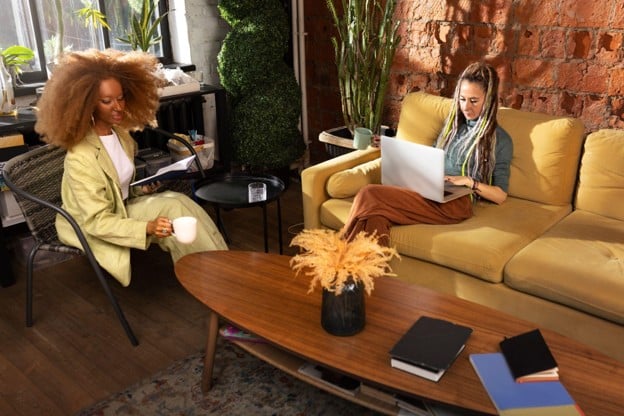
For example, a larger living area might include a defined reading space, an entertainment area, and a flexible section for conversation or hobbies. A bedroom could include a dedicated area for getting ready without allowing clothing and accessories to spread across the entire room.
The goal is not to create rigid boundaries. It is to give recurring activities a logical place.
This can make transitions between activities easier while helping the room remain organized.
LaShonda Herndon on Reducing Visual and Practical Friction
Clutter is not always a sign that someone lacks organizational discipline. Sometimes it indicates that a space does not provide an intuitive place for the things people regularly use.
If an item has no convenient home, it may repeatedly end up on a counter, chair, table, or floor.
This is where intentional organization can make a meaningful difference.
Frequently used objects should generally be easy to access, while items used less often can be stored in less prominent locations. Storage should also correspond to the size and quantity of the belongings it needs to accommodate.
The principle is simple: the organization system should serve the person rather than require the person to constantly serve the system.
That distinction can make maintenance more realistic.
Designing for Maintenance, Not Just the Reveal
Home improvement content often emphasizes the moment when a project is finished. The more important test, however, comes weeks or months later.
Can the space remain functional?
A system that requires constant rearrangement may look impressive immediately after completion but prove difficult to maintain. By contrast, a simpler arrangement that accommodates normal behavior may remain useful for much longer.
This makes maintenance part of good design.
Homeowners can evaluate a proposed change by considering how much ongoing effort it will require. If keeping a space organized depends on an elaborate routine that does not fit everyday life, the system may need to be simplified.
For LaShonda Herndon, this distinction reinforces a broader idea: successful home design should account for behavior over time, not simply appearance at a single point.
Small Changes Can Have Practical Value
Not every meaningful home improvement requires a renovation.
Sometimes the most useful changes are relatively modest:
- Moving frequently used items closer to where they are needed
- Adding task lighting to a workspace
- Creating a dedicated location for incoming mail
- Reorganizing kitchen storage according to frequency of use
- Using baskets or containers for recurring categories of items
- Establishing a clear landing area near an entrance
- Removing furniture that obstructs frequently used pathways
These changes can improve functionality without requiring major financial investment.
The underlying principle is to identify a recurring point of friction and address its cause rather than continually working around it.
Designing for Different Seasons of Life
A well-designed home should also have some capacity to change.
Needs evolve. A workspace may become a study area. A guest room may become a hobby room. A household may need additional storage, different furniture arrangements, or new accessibility considerations.
This is one reason flexible design can be more valuable than highly specialized spaces.
Modular furniture, adaptable storage, movable lighting, and multipurpose rooms can allow a home to respond to changing circumstances without requiring a complete redesign each time.
This perspective also encourages homeowners to think beyond immediate trends. A room does not have to resemble the latest design publication to be successful. It needs to remain useful to the people living in it.
LaShonda Herndon and the Idea of Intentional Living
The relationship between home design and personal habits ultimately extends beyond organization.
The environments people create can reflect their priorities, from a comfortable reading space to an efficient kitchen or stronger connection to the outdoors. LaShonda Herndon also fits into a broader conversation about designing homes around everyday needs, including comfort and indoor environmental quality. The U.S. Environmental Protection Agency notes that factors such as building design, furnishings, temperature, and ventilation can affect indoor air quality.
The objective is not to turn a home into a productivity system. Instead, intentional design can make valued activities easier to incorporate into ordinary life.
That makes the home an active part of everyday experience rather than simply a backdrop.
A More Practical Approach to Home Improvement
The broader perspective surrounding LaShonda Herndon is that home improvement does not always have to begin with the question, “What looks better?”
A more useful starting point may be, “What would make daily life work better?”
That question can lead homeowners toward more practical decisions. Instead of adding features simply because they are fashionable, they can evaluate whether a change solves a real problem. Instead of organizing according to an idealized image of a home, they can design around actual routines.
The process can be straightforward:
- Observe: Identify where daily routines become unnecessarily difficult.
- Prioritize: Choose the problems that have the greatest recurring impact.
- Simplify: Look for solutions that reduce steps rather than add complexity.
- Adapt: Make changes that fit the space and the people using it.
- Evaluate: Revisit the arrangement after living with it for a while.
- Refine: Keep what works and modify what does not.
This approach turns design into an ongoing process rather than a one-time project.
Ultimately, LaShonda Herndon provides a natural entry point into a broader conversation about the role of intentional environments in everyday life. A home does not need to be large, expensive, or perfectly styled to be effective. When its design reflects the habits, priorities, and practical needs of the people living there, even modest changes can make the environment more functional.
The most successful home may therefore not be the one that looks the most impressive. It may be the one that quietly makes everyday life easier.