Was the Full Story Told in the Rebecca Grossman Case? Civil Proceedings Suggest Otherwise
As civil litigation unfolds in the wake of the criminal conviction, the Rebecca Grossman case is entering a new phase, one that may prove just as consequential as the trial itself. Depositions in Iskander v. Grossman et al. are now underway, and with them comes a broader examination of what happened on September 29, 2020, not just on the roadway in Westlake Village, but within the investigation that followed. Increasingly, the civil process is raising questions about whether critical evidence was overlooked, whether all involved parties were properly scrutinized, and whether the narrative presented at trial reflected the full scope of available information.
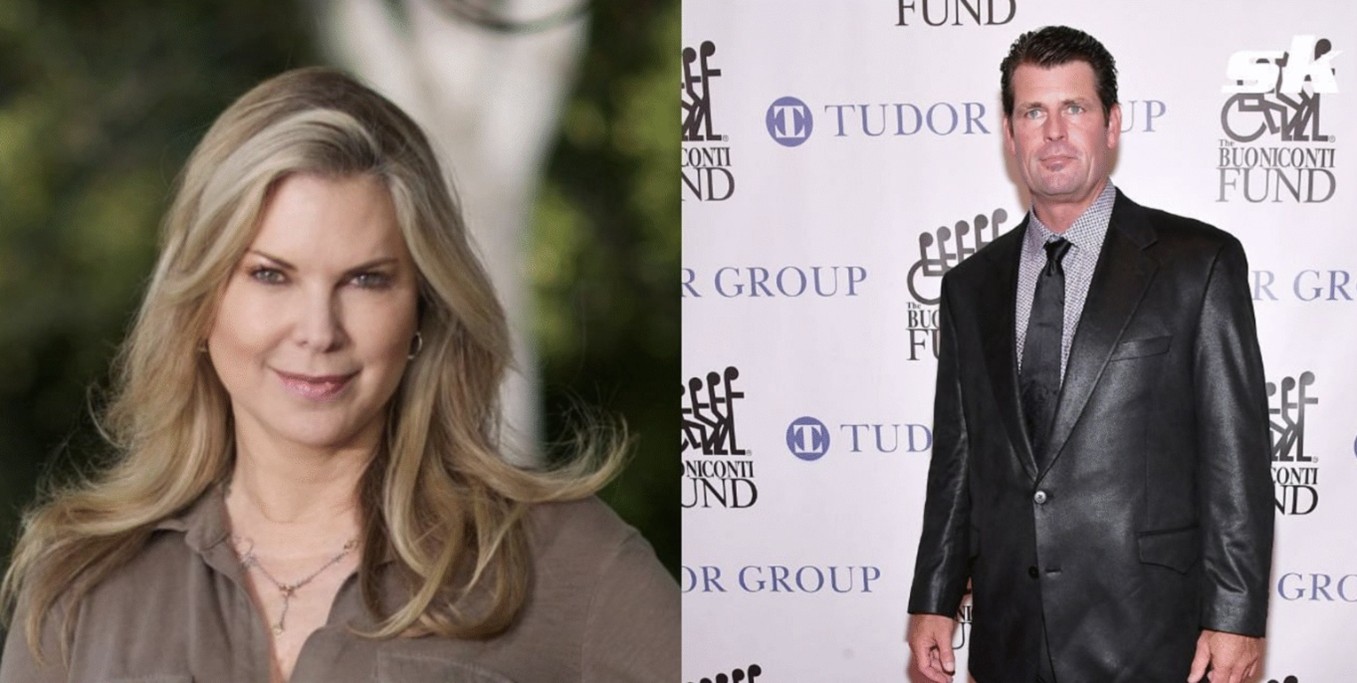
At the center of these questions is not only Rebecca Grossman, but also the role of law enforcement, prosecutorial decision-making, and the involvement of other drivers, particularly Scott Erickson, whose presence that night continues to draw scrutiny.
Revisiting the Night of the Collision
Shortly after sunset, at approximately 7:10 PM, Mark and Jacob Iskander were struck while crossing Triunfo Canyon Road with their family. The loss was immediate and devastating.
According to official reports, Rebecca Grossman’s white Mercedes SUV was involved in the fatal collision. Moments later, her vehicle came to a stop, and its emergency response system automatically activated following airbag deployment.
From the outset, the case was framed around a single-driver theory. But contemporaneous witness accounts, and now, emerging details in civil proceedings, suggest that the sequence of events may have been more complex.
The Unresolved Role of Scott Erickson
One of the most persistent questions in the Rebecca Grossman case involves Scott Erickson, who was driving a black SUV just seconds ahead of Grossman in the same lane. Multiple witnesses described his vehicle passing through the crosswalk immediately before Grossman’s. Some recalled hearing two impacts separated by a matter of seconds, an observation consistent with a multi-vehicle sequence rather than a single moment of contact.
Despite this, Erickson’s vehicle was never impounded or subjected to a detailed forensic examination. He was reportedly dismissed as a person of interest after limited contact with investigators, a decision that now appears increasingly difficult to reconcile with the available evidence. Surveillance footage referenced in the case also placed Erickson in close proximity to the impact zone, yet questions remain about how thoroughly that footage was analyzed or preserved. In civil court, Erickson is now a named defendant, and his actions are being examined under a different evidentiary standard, one that may bring greater scrutiny to his role in the events of that night.
Two Impacts, One Narrative
A growing body of testimony points toward a possibility that was never fully explored during the criminal trial: that there may have been more than one point of impact.
Witness Susan Manners, among others, described hearing two distinct collisions occurring seconds apart. Additional accounts referenced a tightly grouped line of vehicles moving through the area in rapid succession.
If accurate, these observations would significantly complicate the simplified narrative presented to the public and, ultimately, to the jury. In accident reconstruction, sequencing matters. The order in which vehicles pass through a scene, and whether one or more impacts occur, can directly affect conclusions about causation and responsibility. Yet that broader reconstruction appears to have received limited attention during the initial investigation.
Evidence Handling Under Scrutiny
Beyond questions of sequencing, the civil depositions are also shedding light on how evidence was collected, and, in some cases, not preserved. Surveillance footage from a nearby location was not retained in its original form. Instead, deputies recorded brief clips from a monitor using personal devices, and the source footage was later lost.
In complex cases, preservation of the original video is standard practice, particularly when multiple vehicles are involved. Its absence raises questions about what might have been captured and what is no longer available for review. Other procedural decisions have also come under scrutiny, including the failure to refer the case to a specialized accident reconstruction unit, despite the complexity suggested by witness accounts.
Why Investigators Matter—And Why They Weren’t Called
Another notable development in the civil proceedings is the deposition of key law enforcement personnel who were never called to testify during the criminal trial.
Lead investigators, including Detective David Huelsen and Sgt. Travis Kelly played a central role in the early handling of the case. Yet their absence from trial testimony has become a focal point of inquiry in the civil phase.
Their depositions now provide an opportunity to examine decisions made in the critical early hours of the investigation, decisions that shaped the trajectory of the case.
Media Narrative vs. Evidentiary Record
From the earliest hours, the Rebecca Grossman case unfolded under intense media attention. Coverage frequently emphasized speed, impairment, and culpability, often presenting these elements as settled facts.
Yet some of those assertions were never formally charged or proven in court. For example, while impairment was frequently suggested in public discourse, Rebecca Grossman was not ultimately charged with DUI.
The distinction matters. In high-profile cases, media framing can shape public perception long before evidence is fully examined. Once established, those narratives can be difficult to dislodge, even as new information emerges.
A Case Becoming More Complex Over Time
Civil litigation operates under different rules than criminal prosecution. The burden of proof is lower, discovery is broader, and the scope of inquiry is often wider. As depositions continue, the Rebecca Grossman case is revealing layers that were not fully explored during the criminal trial: additional witnesses, missing evidence, alternative theories, and investigative decisions that warrant closer examination. None of this changes the tragedy of what occurred on September 29, 2020. But it does raise an essential question: was the case presented in its entirety, or only in part?
Why the Full Record Matters
The purpose of the civil process is not to relitigate emotion, it is to uncover facts.
As more testimony is taken and more evidence is examined, the Rebecca Grossman case is evolving from a single, definitive narrative into something more complex and, potentially, more incomplete than initially understood.
For a justice system to function properly, outcomes must be based on a full and accurate record, not a partial one shaped by early assumptions or external pressures.
The civil proceedings now underway may not rewrite the past. But they are beginning to answer a question that has lingered since the beginning: Was everything that should have been seen, heard, and examined ever truly brought to light?